Blog › October 2, 2026 · 7 min read
Planning a Kitchen Remodel in South Florida: What to Know
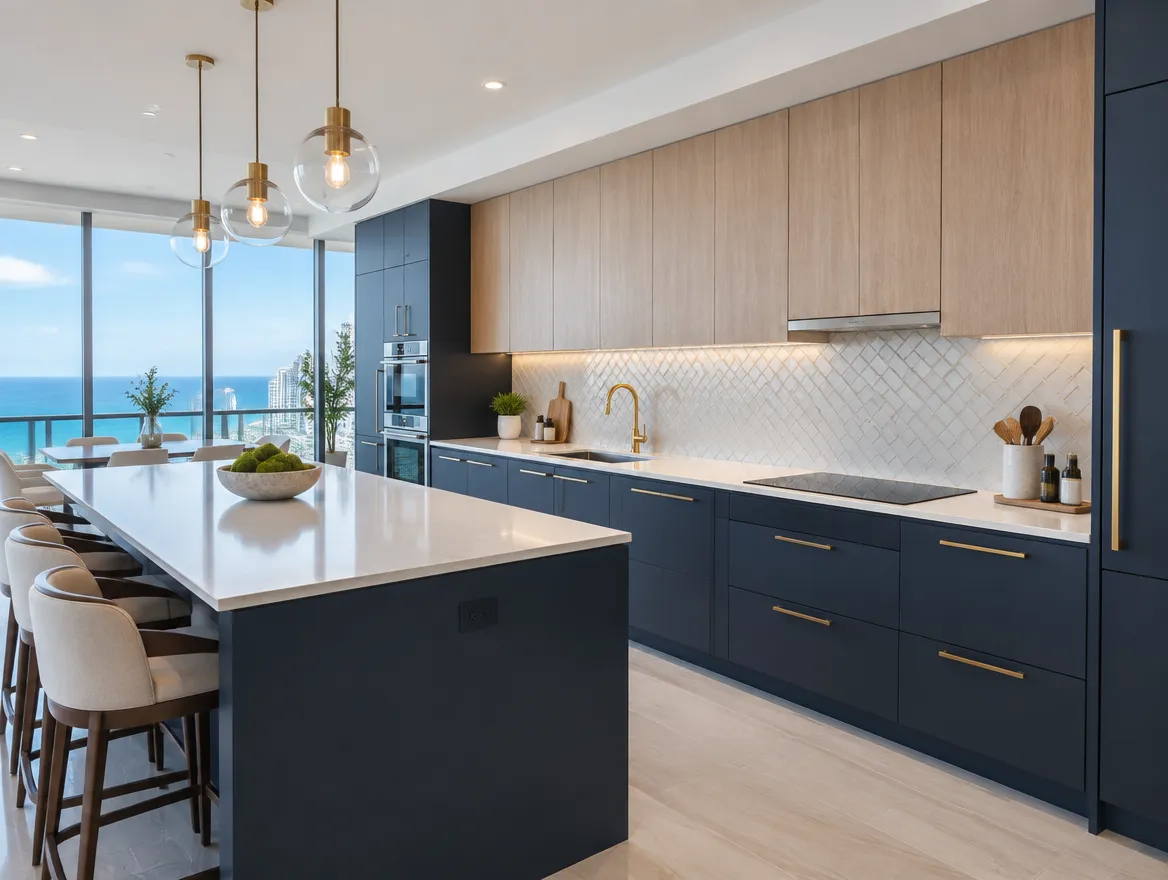
A kitchen remodel in South Florida is not quite the same project it would be in a drier, colder place. Humidity works on cabinet boxes every day, salt air eats cheap faucets near the coast, many kitchens sit inside condo buildings with their own approval process, and hurricane season can shuffle deliveries just when you need them. None of that makes a remodel harder to do well; it just changes the order of decisions. This guide walks through what to settle first, which materials hold up here, how countertops actually get made and installed, what associations and building departments usually expect, and how to plan around lead times so your kitchen is not sitting half-finished.
Key takeaways
- Choose cabinets, sink, faucet and appliances before demolition; most delays come from waiting on orders, not labor.
- Sink base cabinets take the most moisture, so plywood or moisture-resistant panels and good sealing pay off here.
- Countertops are cut by the stone shop from a template taken after cabinets are installed and level.
- Condo and HOA approval, plus a permit for plumbing, electrical or layout changes, belong at the start of the plan.
- During hurricane season, order long-lead items early and never leave the kitchen torn down when a storm is forecast.
Start with how you cook and what your building allows
Before looking at door styles, write down how the kitchen is actually used. Who cooks, how often, what lives on the counter, where groceries land and what never fits. That list decides whether you need more drawers or more upper cabinets, a deeper sink, a bigger hood or simply better lighting over the prep area.
Next, find out what the property allows. If you live in a condo, ask management for the renovation rules before you design anything. If you are in an HOA community, check whether exterior changes such as a new hood vent go through architectural review. And decide early whether the layout stays the same. Keeping the sink, range and refrigerator where they are is usually the simplest path, because moving plumbing or adding circuits generally brings a building permit into the project.
Cabinets that hold up to Miami humidity
Cabinets carry most of the visual weight of a kitchen, and in this climate they also carry most of the moisture risk. Particleboard and lower-grade fiberboard swell and crumble when they stay damp, and the sink base is where that happens first: a loose drain nut, a weeping supply line or a dishwasher hose that drips slowly for months.
If you are replacing cabinets, it is worth putting the better material where the water is, even if the rest of the run is standard. If your existing boxes are solid and only the style is dated, refacing with new doors, drawer fronts and hardware can give you a new kitchen look without tearing out sound cabinets.
- Plywood or moisture-resistant panel for the sink base, at minimum
- Sealed cut edges wherever a cabinet was trimmed on site for plumbing
- A drip tray or leak sensor under the sink, especially in condos above other units
- Stainless or coated hinges and pulls in homes close to the bay or ocean
- Enough clearance behind the dishwasher for hoses to run without kinks
Countertops: template, fabrication and install
Many homeowners expect countertops to arrive ready-made. In practice, stone and quartz counters are fabricated by a stone shop, which cuts and polishes your slabs from a template made in your kitchen. The template can only be taken once the base cabinets are installed, level and fastened, because the counter must match the cabinets exactly. Any change after that point, such as a different sink or a moved cooktop, can mean a new template.
That sequence explains a gap many people find frustrating: cabinets go in, then the kitchen waits while the shop cuts the stone. You can shorten the waiting by choosing your slab, sink, faucet and cooktop before the template appointment and having the sink on site so the shop can cut the opening to its actual size.
Quartz is popular here because it does not need sealing and resists staining. Granite holds up well but some varieties need periodic sealing. Porcelain slabs are thin, hard and resistant to heat and moisture, though they need a fabricator who works with them. Whatever you choose, ask how the seams will fall and where the overhangs need support.
Backsplash, sink and ventilation details that prevent mold
In a humid kitchen, the small joints matter. The line where the backsplash meets the counter and the edge around the sink should be finished with a flexible, mildew-resistant silicone rather than grout, because those joints move and grout cracks. Cementitious grout on the backsplash itself should be sealed, or you can choose a stain-resistant grout that does not need sealing.
Ventilation is the other half. A range hood that ducts outside removes cooking steam and grease; a recirculating hood only filters it and puts the moisture back into the room. If your building or layout allows an exterior vent, it is worth the planning. In high-rises, venting options are often limited by the building, so ask management early rather than buying a hood that cannot be connected.
During demolition, look behind and under everything that comes out. Old water stains, a soft subfloor at the sink or dark spots on the back of drywall tell you where a leak has been. Those areas should be dried, repaired and treated before new cabinets cover them.
Condo and HOA approval: what to gather before you apply
Many South Florida associations require written approval before any remodel starts, and the application goes faster when it is complete the first time. Rules vary by building, but many associations ask for the same handful of items.
- A written description of the work and a simple layout if anything moves
- A certificate of insurance from the contractor naming the association
- Permit documents, when the work requires a permit
- The planned work dates, inside the building's allowed hours
- Service elevator and loading dock reservations for cabinet delivery, stone slabs and debris
- Flooring specifications, since many associations require sound-rated underlayment under new hard flooring
Permits in Miami-Dade, Broward and Palm Beach
As a general rule, plumbing, electrical, structural and layout changes need a building permit from the local building department. In South Florida that means the city's building department for most addresses, or the county for unincorporated areas of Miami-Dade, Broward or Palm Beach. Each office has its own process and review times, so it is worth asking early what your specific project needs.
Replacing cabinets, counters and fixtures in the same locations often falls outside permit requirements, but do not assume. Relocating a sink, adding an island with power or water, upgrading a circuit for a new range or changing a wall usually does need one. A permit is also something buyers, insurers and associations may ask about later, so skipping it can cost more than it saves. When permitted work is part of a Gold Hands kitchen, our general contractor partner pulls the permit and the inspections follow the building department's schedule.
Lead times and hurricane season
Most kitchen remodels that drag on are waiting on something: cabinets in transit, a slab not yet cut, a special-order faucet, a permit in review. Labor is rarely the long part. The practical fix is to make every product decision before demolition and to confirm delivery dates in writing.
Florida hurricane season runs June 1 to November 30. A storm watch can close building access, push supplier deliveries back and send stone shops and crews to emergency work. If you remodel during the season, keep the old kitchen working until the new cabinets are on site, plan for the schedule to shift and make sure open plumbing and wiring can be secured quickly. Some owners simply prefer to schedule a full replacement in the calmer months and do smaller updates, such as backsplash or lighting, during the season.
How to prepare photos and measurements for an estimate
A good set of photos and measurements gets you a clear estimate without anyone needing to come out first. At Gold Hands we price kitchens from exactly this kind of information.
- A wide photo of each wall, taken from the opposite side of the room
- Close-ups of the sink base with the doors open, the floor and any water damage
- The length of each wall with cabinets, the ceiling height and any soffit height
- Window and door positions measured from the nearest corner
- Model numbers of appliances you are keeping or buying
- A short note on what you want: refacing or new cabinets, stone counters, backsplash, flooring, layout changes
Mistakes to avoid
The same few problems show up again and again in South Florida kitchens, and almost all of them are avoidable with planning.
- Starting demolition before cabinets and appliances are ordered and confirmed
- Changing the sink or cooktop after the countertop template is taken
- Putting particleboard under the sink in a humid kitchen
- Buying a vented range hood for a condo that does not allow a new exterior vent
- Applying for association approval without the insurance certificate or flooring specs
- Leaving the kitchen torn down with no working sink when a storm is in the forecast
Frequently Asked Questions
Is refacing cabinets worth it compared to replacing them?
If the cabinet boxes are solid, dry and laid out the way you like, refacing with new doors, drawer fronts and hardware is a reasonable way to update the kitchen with less disruption. If the sink base is swollen, the layout does not work or you are changing countertops to heavy stone on weak boxes, replacement usually makes more sense.
Who makes the countertops, and when are they measured?
A stone shop fabricates them from a template taken after the base cabinets are installed and level. The contractor coordinates the template appointment, delivery and installation, then connects the sink and faucet. Have your sink and faucet chosen, and ideally on site, before the template is made.
What countertop material holds up to Miami humidity?
Quartz and porcelain slabs are both non-porous and need no sealing, which makes them easy in a humid kitchen. Granite performs well too, but some varieties should be sealed periodically. The more important factor is how the edges and sink are sealed and whether the cabinets underneath stay dry.
Do I need my condo association's approval to remodel a kitchen?
Many associations require it, often before any work starts, along with a certificate of insurance and scheduled access to the service elevator. Rules vary by building, so ask management for the written renovation policy before you design or order anything.
Can I live at home during a kitchen remodel?
Most people do. Plan a temporary setup in another room with the refrigerator, a microwave and a coffee maker, and expect a stretch without a working sink during a full replacement. Smaller jobs such as backsplash or lighting usually leave the kitchen mostly usable.
Related guides
- Bathroom Remodel in a Miami Condo vs a House: How to Plan
- Choosing and Installing Tile That Survives Miami Humidity
- Miami Airbnb Turnover Maintenance Checklist for Hosts
Planning this in South Florida?
Send photos and rough measurements for a free estimate. Service page: Kitchen Remodeling · en español.
Call (786) 788-8714