Blog › October 2, 2026 · 7 min read
Miami Airbnb Turnover Maintenance Checklist for Hosts
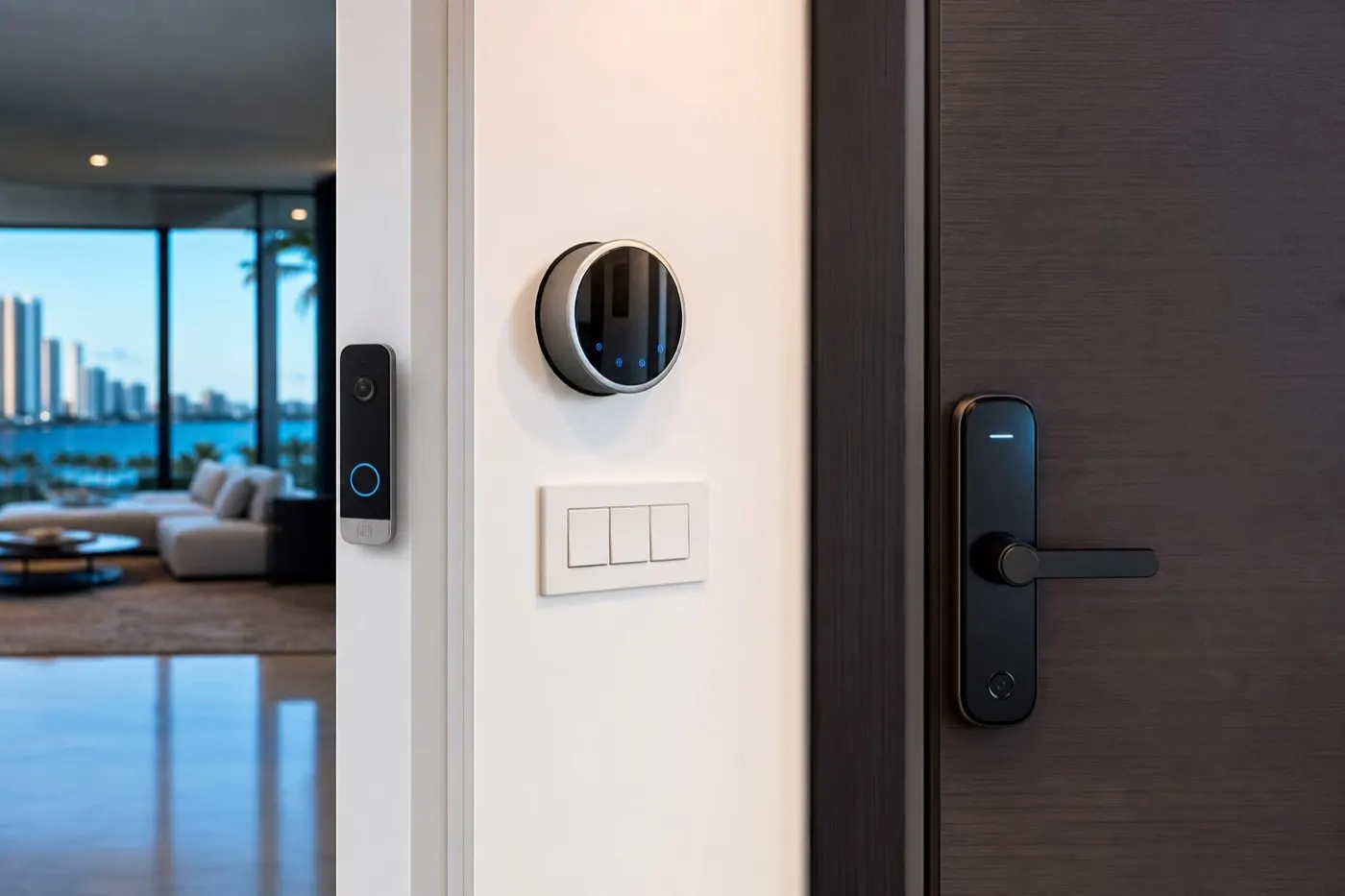
A turnover in Miami is a race against two clocks: the checkout time of the guest who just left and the check-in time of the one on the way. Cleaning gets most of the attention, but the reviews that hurt usually come from repairs: a keypad that will not open, a shower that drips all night, a balcony door that sticks. Salt air and humidity make those problems show up sooner here than in most places. This checklist walks through what to look at between guests, what a host can handle alone, what should be reported to a repair crew or another trade, and how to get ready for a storm when the calendar is full.
Key takeaways
- Plan every repair around the checkout-to-check-in window, and share that window with whoever does the work.
- Salt air quietly corrodes locks, hinges and balcony hardware; replace it with stainless or coated parts.
- Humidity shows up first in shower caulk, exhaust fans and closets, so check them at every turnover.
- Know the difference between what your cleaner reports, what a handyman fixes and what belongs to another trade.
- Do hurricane prep between bookings early in the season instead of waiting for a storm watch.
Start with the checkout-to-check-in window
Every repair decision in a short-term rental comes back to timing. Before anything else, know exactly when the last guest leaves, when your cleaner arrives, how long the cleaning usually takes, and when the next guest can let themselves in. The repair has to fit in what is left.
Ask your cleaning team to finish every turnover with a short punch list and photos: anything loose, broken, stained or not working. Cleaners see the unit more often than anyone else, and a short note with a picture is worth more than a guest message after the fact.
Then sort the list. Some items have to be fixed before the next guest (a lock, a leak, anything unsafe). Others can wait for a slower week (a paint scuff behind a door, a slightly loose cabinet knob).
Doors, locks and smart locks
Locks are the most important item on a turnover checklist because a lock failure stops the stay before it starts. Smart locks add batteries, firmware and weather exposure to the list of things that can fail.
- Open and lock every exterior door from both sides. The deadbolt should throw fully without pushing or lifting the door.
- Check the battery level in the lock's app at every turnover, and change batteries on a schedule instead of waiting for the low-battery warning.
- Keep a physical backup key in a lockbox or with a trusted contact, in case the keypad fails while a guest is outside.
- Look at the strike plate. Shiny scrape marks on the bolt or plate mean the door has shifted and the lock is working too hard.
- Test sliding glass doors and balcony doors. The latch should catch on the first try, and the door should roll without grinding.
- Delete old guest codes and any temporary codes created for cleaners or repair visits.
Salt air: the slow damage you only see up close
Units in Miami Beach, Sunny Isles Beach, Hallandale Beach or anywhere near the bay live with salt in the air. It settles on every metal surface and, combined with humidity, eats through cheap finishes. The damage is slow, which is exactly why it gets missed.
At each turnover, run a hand over the hardware that faces the outside or the bathroom: balcony door handles, lock cylinders, hinges, towel bars, shower trim and cabinet pulls near the sink. Rust spots, pitting, a gritty feel when a key turns or a hinge that squeaks are early signs. When a piece starts to go, replace it with stainless or coated hardware intended for coastal use rather than the same builder-grade part.
For exterior keypads, choose a model rated for outdoor use and ask whoever installs it to check the gasket between the lock and the door.
Humidity, mildew and the bathroom
Humidity is the other half of the Miami climate story, and in a rental it builds up quietly. Guests take long showers, turn the AC down or off, and leave wet towels in closets.
Look closely at shower and tub caulk at every turnover. Dark spots that do not wipe away are mildew that has grown into the caulk; cleaning will not fix it. The fix is to cut the old caulk out completely, let the joint dry and reseal with a mildew-resistant product. Do the same check on grout lines in the corners of the shower, where water sits longest.
Hold a sheet of tissue paper up to the bathroom exhaust fan with the fan running. If the tissue barely moves, the fan is not pulling moisture out, and the mildew will keep coming back.
Open closets and smell them. A musty smell or spots on the back wall mean the air is staying wet. That is a conversation for your AC contractor about thermostat settings and drainage when the unit is empty, not something paint will solve.
Wear items that fail between guests
Guests do not know which drawer sticks or which chair wobbles, so a few items wear out much faster in rentals and deserve a regular look.
- TV mounts: grab the screen gently and check for play. A loose mount only gets looser.
- Bed frames and headboards: tighten bolts, listen for squeaks, check slats.
- Dining and patio chairs: look for loose legs and cracked joints before someone sits on a weak one.
- Toilets: listen for a toilet that keeps refilling, and check that the seat is tight.
- Faucets and shower heads: look for drips, low pressure from mineral buildup and loose shower arms.
- Blinds, curtain rods and closet doors: these get pulled hard and come off their brackets or tracks.
- Walls: door-handle holes, luggage scuffs and nail holes from guests hanging things.
- Smoke detectors: test them and replace batteries as part of your routine.
What to report and what to fix
Not every problem is a handyman job, and some should not be touched by anyone but the right trade.
Things a host or co-host can usually handle: changing smart-lock batteries, resetting a tripped GFCI outlet, replacing a light bulb, tightening a loose cabinet knob, and swapping a shower curtain or liner.
Things to report to a handyman: locks and smart locks that will not install or align, running toilets, dripping faucets, worn caulk, loose TV mounts, broken furniture, drywall damage, doors that stick or will not latch, sliding door rollers and weak exhaust fans.
Things that belong to another trade or to the building: an AC that will not cool or a leak from the air handler goes to an HVAC contractor; a sewer backup, water heater problem or gas smell goes to a plumbing contractor or the gas utility; burning smells, sparking outlets or panel problems go to an electrician right away; pests go to pest control; and in a condo, leaks from the unit above, roof problems and anything in shared pipes or common areas go to the association.
Hurricane prep between bookings
Florida's hurricane season runs from June 1 to November 30, and storms do not respect a booking calendar. The goal is to have the unit ready before a storm is forecast, so you are not trying to send a crew in while a guest is staying there.
Early in the season, pick a gap between bookings and go through the storm side of the unit: check that accordion shutters open and close smoothly, clean the tracks, make sure storm panels are labeled and stored where they can be reached, and confirm that the hardware to mount them is with the panels. Check door sweeps and thresholds on doors that face the weather, since wind-driven rain finds those gaps first.
Many condo associations ask owners to bring in balcony furniture and loose items when a storm approaches. Find out what your building expects and leave clear instructions for guests and your cleaner. After a storm passes, schedule a walkthrough with photos before the next check-in, looking for water at doors and windows, damaged screens and anything moved on the balcony.
Condo and HOA rules that affect repairs
If your rental is in a tower or a gated community, the building's rules affect every repair. Many associations require a certificate of insurance from any contractor, limit working hours, and ask for a service-elevator reservation or a sign-in at the front desk. Some limit what can be changed on the front door, including the type of lock or keypad visible from the hallway. Keep a copy of your building's contractor rules and send it to whoever does your repairs, so a same-day visit is not turned away at the desk.
Short-term rental rules also differ from city to city and from one association to the next. Check with your city and your association directly before listing a unit or changing how it is used.
How to send a repair request that gets fixed the same day
The fastest repairs start with a clear message. Send a wide photo that shows where the problem is and a close-up of the part itself. For locks, include a photo of the door edge and the model name. For fixtures and furniture, include rough measurements and any brand or model numbers you can find. Add the unit address, the building name, how access works, and your checkout and check-in times.
At Gold Hands, between-guest repairs are same-day when you book in the morning; we prioritize those calls, so we always ask for your checkout and check-in window first. You can text photos or send them on WhatsApp to (786) 788-8714. For hosts and property managers with several units, Gold Hands also sets up recurring walkthrough arrangements, priced directly based on the number of units and how often you want visits.
Frequently Asked Questions
How often should I do a maintenance walkthrough on my rental?
A quick check at every turnover is worth building into your cleaner's routine: locks, leaks, caulk and anything loose. A more thorough walkthrough, covering hardware, exhaust fans, door alignment and storm equipment, makes sense a few times a year and before hurricane season. Busy units and units close to the water usually need that deeper look more often.
Should my cleaner fix small things or just report them?
Most cleaners work well as your early warning system. Ask them to report problems with a photo rather than attempt repairs, unless it is something simple you have agreed on, like changing a light bulb. That keeps the turnover on schedule and gives you a record of what changed.
What is the most common turnover repair in a Miami rental?
Every unit is different, but locks, running toilets, worn shower caulk, loose TV mounts and sticking sliding doors come up again and again. Salt air and humidity speed up the wear on hardware and caulk, so units near the coast tend to see those items sooner.
Can I leave storm prep to my guests?
It is better not to. Guests may not know how the shutters work or where the panels are stored, and some will leave before a storm arrives. Prepare the unit between bookings early in the season, and give guests short written instructions for anything they may need to do, such as bringing in balcony furniture.
Do I need a permit for turnover repairs?
Routine repairs like replacing a lock, resealing a shower or fixing furniture generally do not. Work that changes plumbing, electrical or structure usually needs a permit from the local building department, and condo associations often have their own approval process. If you are unsure, ask your building and the city or county before work starts.
Related guides
- Bathroom Remodel in a Miami Condo vs a House: How to Plan
- Planning a Kitchen Remodel in South Florida: What to Know
- Choosing and Installing Tile That Survives Miami Humidity
Planning this in South Florida?
Send photos and rough measurements for a free estimate. Service page: Airbnb & Short-Term Rental Maintenance · en español.
Call (786) 788-8714