Blog › July 10, 2026 · 5 min read
Hurricane season in South Florida runs June through November, and the work that actually protects your home usually isn't glamorous—it's caulk, screws, and clearing debris. This checklist covers the handyman-level fixes that make the biggest difference before a storm, and where the line is for jobs that need a licensed contractor.
Key takeaways
- Start hurricane prep in May or early June, before storms are actually forming
- Shutter readiness is mostly about clean, working hardware, not new installation
- Sealing doors, windows, and garage seams stops the wind-driven rain that causes most water damage
- Clear gutters and confirm drainage slopes away from the foundation before the rainy season peaks
- Anchor or store loose outdoor and exterior-mounted items before wind speeds pick up
Why Prep Timing Matters Here
Miami's combination of heat, humidity, and salt air quietly wears down the small stuff that ends up mattering most in a storm—rusted screws, dried-out caulk, hinges that stick, gutter brackets corroded to the point of snapping under water weight. None of that shows up on a quick glance, which is why late-August scrambling (when a storm is already forming) is the worst time to discover a shutter track is bent or a fascia board is soft.
The better approach is a walkthrough in May or early June, before the season's first advisory, so repairs happen on a normal schedule instead of a panic timeline. A two-hour handyman visit in June is a lot cheaper and calmer than a same-week emergency call with a storm 72 hours out.
Shutters and Window Protection
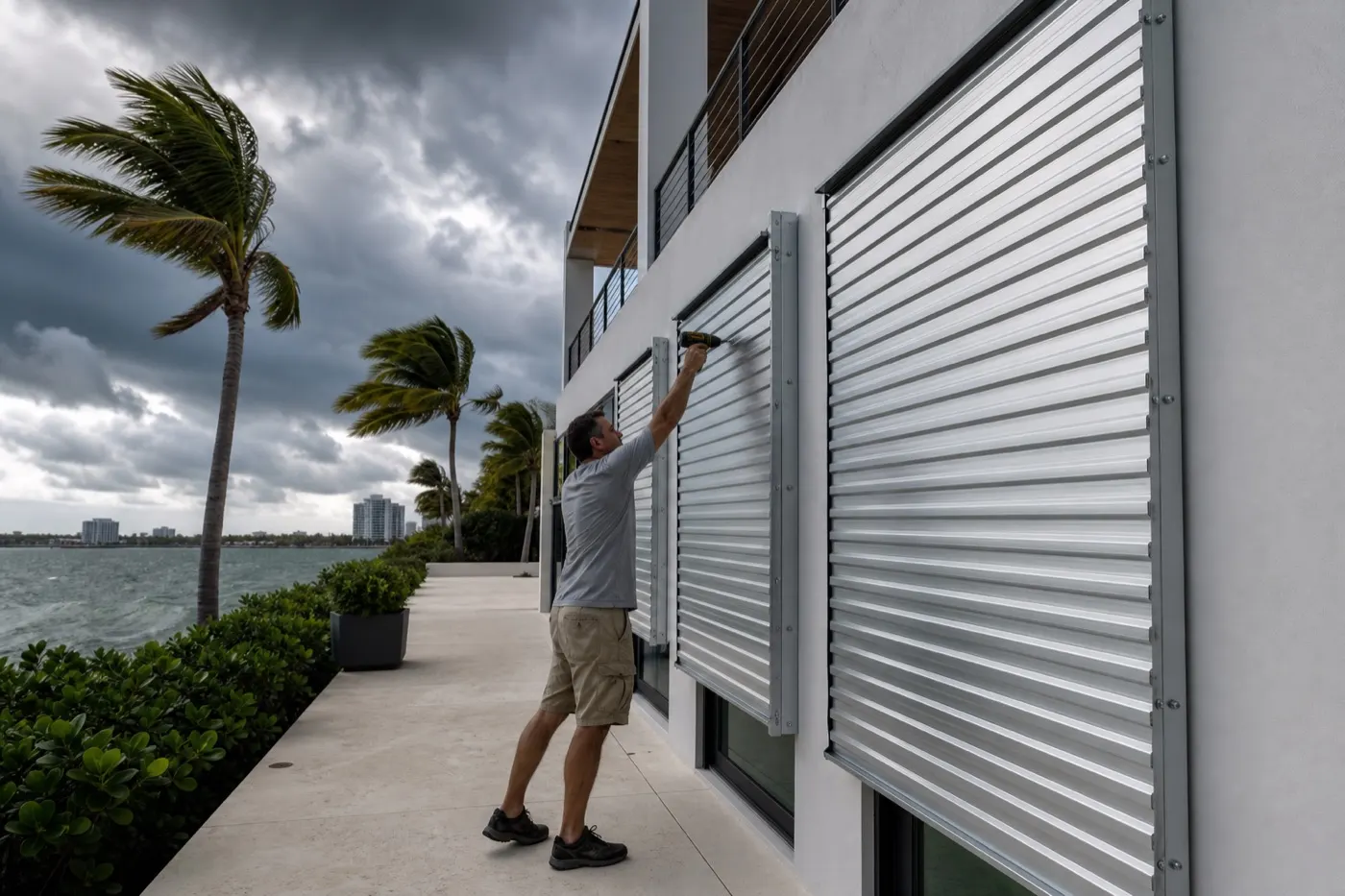
If your home has accordion or Bahama shutters, the prep isn't installing them from scratch—it's making sure they actually close and lock. Tracks fill with salt residue, sand, and dead insects over a year; wheels seize; wing nuts corrode solid. A handyman can clean tracks, lubricate hardware, replace stripped wing nuts or clips, and confirm every panel closes fully and latches.
For homes using removable panels or plywood, the issue is usually storage and fit, not the material itself. Panels warp, pre-drilled anchor holes get lost, and labeling fades. It's worth relabeling each panel by window and pre-staging the mounting hardware in a labeled bin so installation on a storm day takes an hour, not an afternoon.
Full impact window or permanent shutter installation is a licensed-contractor job, especially anything involving structural anchoring into stucco or masonry that affects the building envelope. Gold Hands handles the maintenance, hardware, and readiness side, and refers out new shutter or impact window installation to a licensed pro.
- Clean and lubricate accordion/Bahama shutter tracks and hinges
- Replace corroded wing nuts, clips, or bolts before they seize
- Relabel and pre-stage plywood or panel hardware by window
- Check that every panel fully closes and latches—not just most of them
Weatherproofing and Sealing
Wind-driven rain in a tropical storm doesn't fall straight down—it gets pushed sideways under doors, around window frames, and through gaps that never leak in a normal afternoon shower. Recaulking exterior window and door frames, replacing worn weatherstripping, and installing or replacing door sweeps are inexpensive fixes that stop a surprising amount of water intrusion.
Garage doors deserve a specific look. The bottom seal degrades fast in Miami heat and is one of the most common places water enters during a storm. It's also worth checking that the garage door itself is rated for wind pressure or has a bracing kit if it's older; a garage door failure can pressurize a house and cause much bigger damage than the water itself.
- Recaulk exterior window and door frames showing cracks or gaps
- Replace worn door sweeps and weatherstripping
- Inspect and replace the garage door bottom seal
- Check attic vents and soffits for gaps that let wind-driven rain in
Securing Loose Fixtures and Outdoor Items
Anything that can become a projectile in 60+ mph wind needs to be anchored, stored, or taken down before a storm. This includes light fixtures on soffits, house numbers, mailbox flags, loose railings, and satellite dishes with weak mounting brackets. It also includes patio furniture, potted plants, and grills—items that seem heavy enough to stay put but aren't once gusts pick up.
A handyman visit can tighten or re-anchor anything mounted to the exterior—railings, address plaques, exterior light fixtures, awning brackets—and identify which outdoor items need a storage plan versus which can be strapped down. For anything involving the electrical panel or hardwired exterior fixtures with exposed wiring, that gets referred to a licensed electrician rather than handled as a quick tighten-and-go.
- Re-tighten or re-anchor railings, house numbers, and mounted fixtures
- Check satellite dish and awning brackets for corrosion or looseness
- Plan storage for patio furniture, planters, and grills
- Flag anything electrical for a licensed electrician, not a quick fix
Gutter and Drainage Clearing
Clogged gutters and downspouts are one of the most preventable causes of roof and fascia damage in a heavy rain event. Miami's oak trees, palm fronds, and seasonal debris fill gutters faster than most homeowners expect, and a full gutter during a tropical storm backs water up under the roofline instead of moving it away from the house.
Beyond the gutters themselves, check that downspouts discharge at least 4-6 feet from the foundation and that the ground slopes away from the house. If your yard tends to pool water near the foundation during normal rain, that's worth addressing before hurricane season, not during it—standing water against the foundation for days is how slow structural and mold problems start.
- Clear gutters and downspouts of leaves, palm debris, and sediment
- Confirm downspouts discharge away from the foundation
- Check that grading slopes away from the house, not toward it
- Look for sagging gutter sections or loose brackets before they fail
The 48-Hour Pre-Storm Walkthrough
Once a storm is actually tracking toward South Florida, the checklist shifts from maintenance to execution. Close and lock all shutters, bring in or strap down outdoor furniture, clear gutters one last time if there's been recent debris, and do a final check of door sweeps and window seals. Charge battery backups, and confirm any generator (if you have one) has fresh fuel and starts.
This is also the moment to photograph the exterior of your home—roof, fence lines, AC unit, fixtures—for insurance documentation before any damage occurs. A few phone photos taken calmly in advance are far more useful than trying to remember what things looked like after a storm passes.
Frequently Asked Questions
When should hurricane prep actually start in Miami?
Late May or early June, before the season officially opens June 1st. That gives time to fix shutter hardware, reseal windows, and clear gutters on a normal schedule instead of during a storm watch.
Can Gold Hands install accordion shutters or impact windows?
Gold Hands handles shutter maintenance, hardware repair, and readiness checks. New shutter systems or impact window installation typically require permitting and a licensed contractor, and Gold Hands refers that work out.
How often should gutters be cleaned before hurricane season?
At minimum once in late spring before the season starts, and again mid-season if you have heavy tree cover. Miami's mix of oak leaves and palm debris clogs gutters faster than in most climates.
What outdoor items actually need to come inside before a storm?
Anything light enough to lift in strong wind—patio furniture, potted plants, umbrellas, decorations, grills, and trash cans. Heavier fixed items should be checked for loose anchoring rather than moved.
Is caulking and weatherstripping really worth it before a hurricane?
Yes—most water intrusion during tropical storms comes from wind-driven rain finding small gaps around doors, windows, and garage seals, not from roof failure. Sealing those gaps is inexpensive and catches a real amount of damage before it starts.
How do I book a pre-hurricane handyman check with Gold Hands?
Call (786) 788-8714 or request a visit through the general handyman service page. A single visit can usually cover shutter hardware, sealing, fixture anchoring, and gutter clearing in one appointment.
Need a hand in Miami?
Gold Hands Miami — insured & bonded, background-checked crews, free upfront quotes. Related: general handyman.
Call (786) 788-8714