Blog › July 15, 2026 · 5 min read
In most of the country, a hairline stucco crack or a slow-draining AC line can wait a few months. In Miami, it can't. Between the humidity, salt air, afternoon downpours, and long AC-running season, small maintenance gaps turn into rot, mold, and drywall damage faster than homeowners expect. Here are 10 repairs we see deferred constantly—and what they actually cost when they're ignored.
Key takeaways
- Small gaps in caulk, grout, and stucco give Miami's humidity and rain a direct path into your walls and subfloor
- AC condensate lines and gutters need routine clearing, especially through the rainy season, to avoid water damage
- Fixing these issues early usually costs tens to a few hundred dollars; ignoring them can mean thousands in drywall, flooring, or tile replacement
- Most of these are standard general handyman jobs Gold Hands can knock out in one visit—call (786) 788-8714 or see /general-handyman.html
- Anything involving major electrical, plumbing behind walls, or permit work gets referred out to a licensed pro
1. Cracked or Missing Caulk Around Tubs, Sinks, and Windows
Caulk is the cheapest insurance in your house, and it fails silently. In South Florida's humidity, a gap in bathroom caulk doesn't just look bad—it lets water seep behind tile and into drywall or subfloor, where it stays damp because the air around it rarely dries out fully. Give it a year and you're looking at soft drywall, a moldy smell, or tile that sounds hollow when tapped.
Exterior caulk around windows and doors does double duty here: it's your seal against both water intrusion and wind-driven rain during storms. Once it cracks or shrinks away from the frame, wind-driven rain during a summer squall can push moisture straight into the wall cavity.
- Bathroom/kitchen caulk: replace every 1-2 years, sooner if you see gaps or mildew staining
- Exterior window/door caulk: inspect before hurricane season (May) and re-caulk any gaps immediately
- Cost to fix now: $5-15 in materials or a small handyman visit; cost if ignored: drywall/subfloor replacement running several hundred to a few thousand dollars
2. Grout Gaps and Cracked Tile Grout
Grout is porous, and once it cracks, water travels underneath the tile rather than off the surface. In a Miami shower that's used daily and rarely fully dries between uses, that means constant moisture sitting against the mortar bed. Left alone, this leads to loose tiles, black mold in the grout lines, and eventually a full tile job instead of a simple regrout.
The fix is usually straightforward: dig out the failing grout, clean the joint, and re-grout with a mildew-resistant product. It's a job that takes an afternoon and costs far less than replacing tile.
3. Clogged or Disconnected AC Condensate Lines
Your AC runs 8-10 months a year in Miami, and the condensate line carrying moisture away from the unit clogs easily with algae and dust in this climate. When it backs up, water doesn't just drip—it can overflow the drain pan and soak the ceiling below an attic unit, or pool around a closet air handler and wick into the surrounding drywall and flooring.
Signs to watch for: a musty smell near vents, water stains on the ceiling under an attic-mounted air handler, or the AC shutting off unexpectedly (many units have a float switch that kills power when the line backs up—annoying, but it's saving you from a bigger mess).
A yearly flush with a wet/dry vac or a simple vinegar treatment prevents almost all of this. It's a five-minute job that homeowners routinely put off until there's a stain on the ceiling.
4. Hairline Stucco Cracks
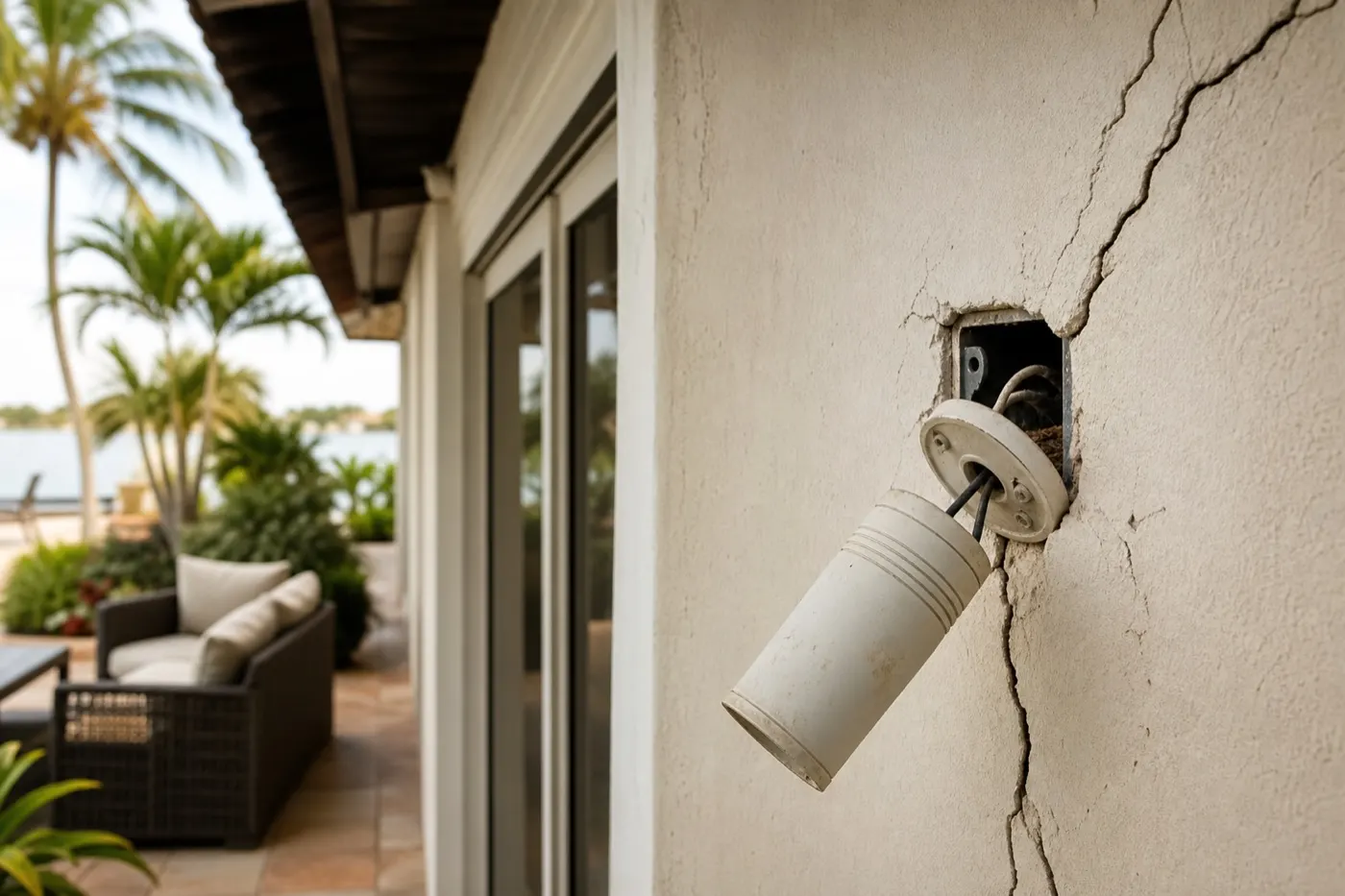
Stucco is the standard exterior finish on most Miami homes, and it moves with temperature swings and settling. Small cracks are normal, but once they open past hairline width, they become a direct path for rain to reach the wood sheathing or block wall behind. Combine that with our afternoon thunderstorms and you get slow, hidden water intrusion that isn't obvious until paint starts bubbling or you smell mildew inside on that wall.
Sealing cracks with an elastomeric patch compound before hurricane season is one of the higher-value small repairs a homeowner can do. It's also one of the most commonly skipped, because the crack doesn't look urgent from the driveway.
5. Loose Gutters, Clogged Downspouts, and Poor Drainage at the Foundation
Miami's rainy season doesn't sprinkle—it dumps. A clogged gutter or a downspout that empties right next to the foundation sends a concentrated stream of water into the soil against your slab, which over time contributes to cracked pavers, stained stucco at the base of the wall, and even water finding its way into a ground-floor room during heavy storms.
Cleaning gutters twice a year (spring and after the rainy season) and making sure downspouts extend at least 4-6 feet from the foundation is a cheap habit that prevents an expensive one: repairing a wet interior wall or repouring settled pavers.
6. Weatherstripping, Door Seals, and Peeling Exterior Paint
Worn weatherstripping on exterior doors lets humid outside air into the house, which your AC then has to work overtime to dehumidify—raising your electric bill and giving mold more of a foothold near entry points. It also lets rain blow in during storms, damaging flooring just inside the door.
Peeling or bubbling exterior paint is often a sign that moisture is already trapped underneath, either from a small stucco crack or failed caulking nearby. Repainting over the problem without fixing the water source underneath just hides it for another season.
These are textbook general handyman jobs—quick to fix, easy to miss, and cheap compared to what happens if they're left alone. Gold Hands handles this kind of small-to-medium repair list on a single visit; see our general handyman services at /general-handyman.html for the full scope of what we cover.
- Replace worn weatherstripping: $10-30 in materials, 30-60 minutes per door
- Spot-prime and repaint peeling exterior trim: a few hundred dollars if caught early
- Ignored for 2-3 years: wood trim rot, interior water stains, full repaint of a wall or fascia section
7-10. The Quiet Ones: Running Toilets, Dripping Faucets, Loose Fence/Railing Hardware, and Squeaking Hinges
A running toilet can waste hundreds of gallons a month, quietly adding to your water bill and, if the flapper is leaking onto the floor, softening subfloor over time. A dripping faucet under a vanity often goes unnoticed until the cabinet floor is swollen and stained. Neither is dramatic, and both feel too minor to schedule a repair around—until the fix becomes a cabinet replacement instead of a $10 flapper.
Loose railing or fence hardware corrodes faster near the coast thanks to salt air, and what starts as a wiggle becomes a safety issue on a stair rail or pool fence. Squeaking hinges and sticking doors are usually just swelling from humidity, but they're also the easiest, cheapest fixes on this entire list—and the ones most likely to get put off simply because they're annoying, not urgent.
Frequently Asked Questions
Why do small repairs turn into big problems faster in Miami than other places?
The combination of high humidity, near-constant AC use, salt air near the coast, and intense rainy-season storms means moisture finds gaps quickly and doesn't dry out the way it would in a drier climate. A crack or gap that might sit harmlessly for years elsewhere can start causing mold or rot within months here.
How often should I do a general maintenance walkthrough of my home?
Twice a year is a reasonable minimum: once in spring before the rainy season ramps up, and once after hurricane season in late fall. Check caulk, grout, gutters, AC lines, and exterior paint/stucco each time.
Can Gold Hands handle all 10 of these repairs in one visit?
Most of them, yes—caulking, grout touch-ups, gutter clearing, AC condensate line cleaning, weatherstripping, minor stucco patching, and fixture repairs are all standard general handyman work. Gold Hands is insured and bonded for this kind of home maintenance; for anything that requires opening up walls for plumbing or electrical work, we'll tell you upfront and refer you to a licensed pro.
Is it worth fixing hairline stucco cracks myself?
For very small, surface-level cracks, a DIY elastomeric patch can work fine. Larger cracks, cracks that keep reopening, or cracks near window frames are worth having someone look at in person, since they can indicate a deeper moisture or structural issue.
What's the single most commonly skipped repair you see?
AC condensate line maintenance and bathroom caulk, by a wide margin. Both are invisible day to day, both are cheap to maintain, and both cause some of the most expensive water damage calls we get when they're ignored for a year or two.
Need a hand in Miami?
Gold Hands Miami — insured & bonded, background-checked crews, free upfront quotes. Related: general handyman.
Call (786) 788-8714