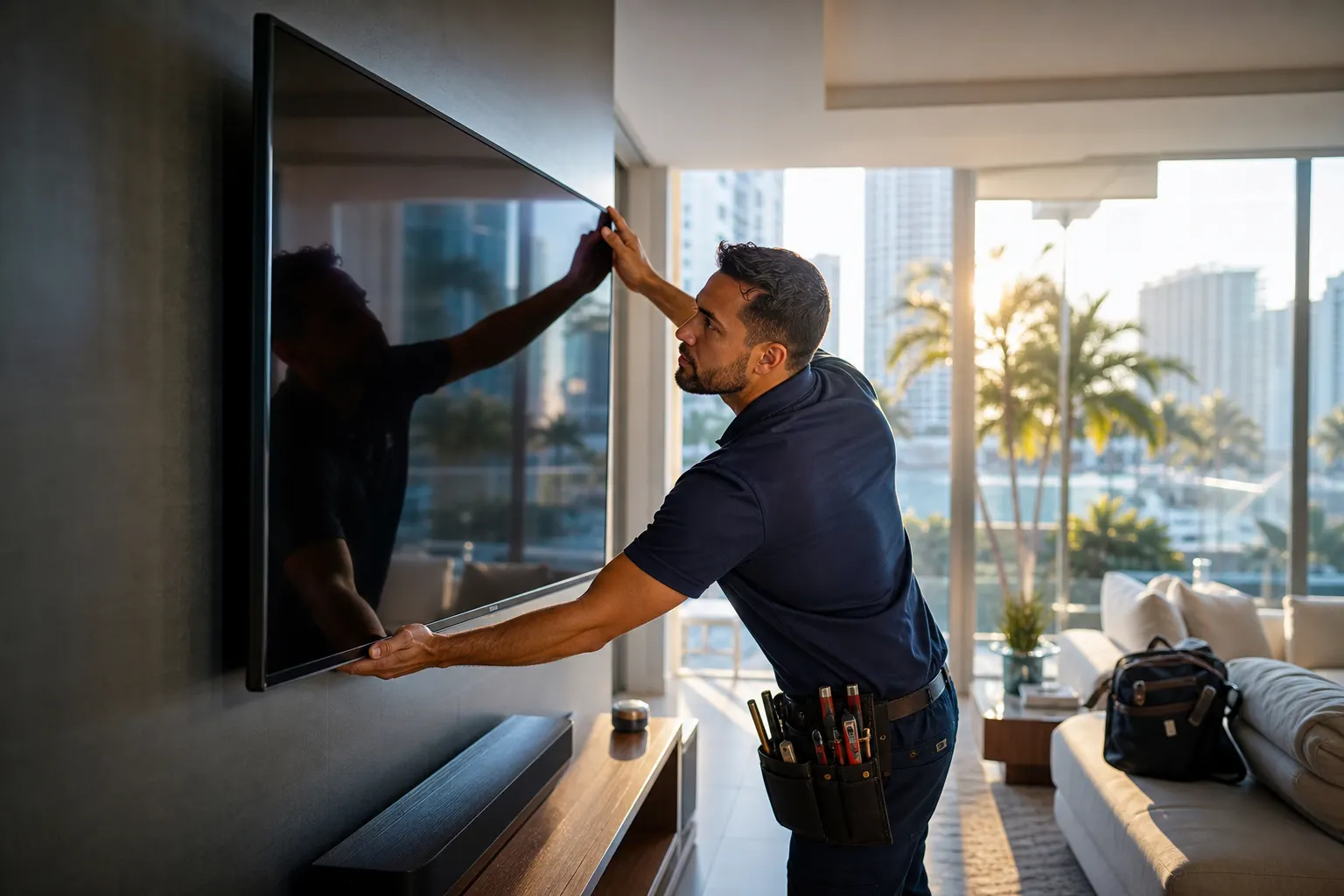
If you're setting up a study corner or mounting a TV before school starts, the wall behind it matters more than the bracket. Miami homes mix poured concrete, hollow drywall, and old plaster, and each needs a different anchor. Here's how to choose hardware that holds through humidity and busy households.
What to do this week
- Knock on the wall and use a magnet to find studs before buying anchors.
- Choose anchors rated for at least 4x the weight of the TV or desk load.
- Check for musty smells or soft drywall if the home was empty this summer.
- Use stainless or coated hardware in humid rooms and garages.
- If the wall type is unclear, call an insured handyman rather than guessing.
The short answer: match the anchor to the wall, not the box. In Miami, most interior walls are either hollow drywall over studs, solid poured concrete, or older plaster over lath. TVs need anchors rated for at least four times the TV's weight, and desks should never rely on drywall alone. Use a stud finder and a magnet to confirm what's behind the paint before you drill.
A 55-inch TV can weigh 30 to 50 pounds with the mount, and the leverage on a full-motion arm multiplies that pull. That's why a single drywall toggle is not enough on its own. If you hit a stud, lag bolts are ideal. If you don't, a heavy-duty toggle or a concrete anchor is the right call depending on the wall.
For desks, floating or wall-mounted designs are popular in small Miami apartments, but they carry books, laptops, and leaning students. Those loads are constant, not occasional, so the anchor choice is even less forgiving.
How to identify your wall type before you drill
Knock on the wall. A hollow, echoing sound usually means drywall over wood or metal studs. A dull, solid thud suggests concrete or block. A magnet run across the surface can find drywall screws and map studs. In older Miami homes, plaster over lath can feel solid but crumble when drilled, so use a masonry bit and a plastic anchor designed for plaster.
If you're unsure, stop and test in a closet or behind furniture first. A small pilot hole tells you more than any guess.
- Drywall over studs: lag bolts into studs, or heavy-duty toggle anchors between studs.
- Poured concrete or block: masonry bit plus sleeve or wedge anchors.
- Plaster over lath: masonry bit, plastic or lead anchors, and gentle pressure.
- Never use self-drilling drywall anchors for a TV or a loaded desk.
Humidity, heat, and the back-to-school rush
South Florida's summer pattern of heat, humidity, and afternoon storms is still with us, and that matters indoors. Humidity can soften drywall paper and speed up corrosion on cheap hardware. Stainless or coated anchors last longer in garages, lanais, and exterior-adjacent walls.
If your home sat empty for part of the summer, check for musty smells or soft drywall before mounting anything heavy. A small leak behind a wall can turn a simple TV mount into a bigger repair. Gold Hands Miami is an insured local team that handles TV mounting and small wall repairs; you can reach them at (786) 788-8714 if you'd rather not guess.
King tides and heavy rain can also push moisture into ground-floor units. If you see bubbling paint or a chalky residue near the baseboard, fix the moisture source before hanging a desk or TV on that wall.
A simple back-to-school mounting checklist
Measure twice, drill once. Mark your bracket holes with a pencil, level the plate, and confirm the anchor type before you commit. For desks, add a center support leg if the span is longer than 48 inches. For TVs, leave at least two inches of clearance behind the panel for airflow, especially in a closed cabinet or media niche.
Keep the weight rating of your anchors in mind: the package number is per anchor in ideal conditions, so use more anchors than the minimum and spread them out. If the wall is questionable, a floor-standing TV stand or a freestanding desk is a safer choice than a failed mount.
- Use a level and a stud finder every time.
- Pre-drill with the bit size the anchor manufacturer lists.
- Tug-test the mount or desk gently before loading it.
- Route cables in wall-safe channels, not pinched behind drywall.
Sources
- Heat and humidity return to South Florida with more storms - CBS News
- Drier air arrives for the weekend, but king tides bring flooding concerns - WPBF
- Unoccupied South Florida Properties 77.6% More Likely to Show Mold Warning Signs, New Study Finds - PR Newswire
FAQ
Can I mount a TV on drywall without studs?
Yes, but only with heavy-duty toggle anchors rated well above the TV's weight, and ideally with at least two anchors. A full-motion mount puts more stress on the wall, so studs are always preferred. If you can't find studs, consider a smaller fixed mount or a professional assessment.
What anchor should I use for a wall-mounted desk in Miami?
For a loaded desk, lag bolts into studs are best. If studs aren't available, use heavy-duty toggle anchors and add a center support leg. Never rely on plastic drywall anchors alone for a desk that holds books or a laptop.
Does humidity affect wall anchors in South Florida?
Yes. High humidity can corrode cheap hardware and soften drywall over time. Use stainless or coated anchors in garages, lanais, and exterior walls, and fix any moisture or leak issue before mounting something heavy.
Gold Hands Miami is insured. We do not perform permit-required work; we refer those jobs to licensed trades. Phone (786) 788-8714.
Need this handled in Miami?
Same-day handyman and painting crews. Related: services.
Call (786) 788-8714