Home › Light Fixture Installation › Palmetto Bay
Two things about Palmetto Bay change how outdoor lighting is done here. The first is what the walls are made of. A great many houses in 33157 were rebuilt after Hurricane Andrew with solid concrete construction, and a solid wall has no cavity — nothing to route a cable through, nothing to hide a run inside, and no stud to catch. Every fixing is a masonry anchor, and moving a light even a foot from where its outlet sits becomes a real decision rather than a small one. The second is distance. Lots are large and drives are long, so a low-voltage run reaching the gate or the far side of the garden is carrying its load much further than the average, and the classic symptom is not darkness but dimness — the heads near the house bright, the ones at the end yellow and tired. Gold Hands replaces exterior fixtures on outlets that already exist here: doorway and wall lanterns, eave downlights, path and driveway heads on cable laid at low voltage years ago, together with seals, lenses, lamps, dusk sensors and timeclocks. An electrical licence is something we do not hold, and licensed work is something we do not take. Exterior sockets that do not yet exist, wiring taken down a drive, a first feed to a transformer, panel changes or anything permitted is a licensed electrician's, GFCI protection included — outdoors, in wet ground, that division exists for good reason.
Lead with the power when you contact us. Which fittings are dead and how many? Did they go out as a group in one evening, or one at a time? Are any of them not dead at all but simply dim, which is a different fault with a different cure? Is there a low-voltage transformer on the property — typically in the garage or on the outside wall beside it — and how many heads is it feeding? Send those answers to (786) 788-8714, add photographs if you have them, and the reply will tell you what is probably wrong. We work across 33157, in the Village of Palmetto Bay and the Perrine neighbourhoods in unincorporated Miami-Dade that share the ZIP.
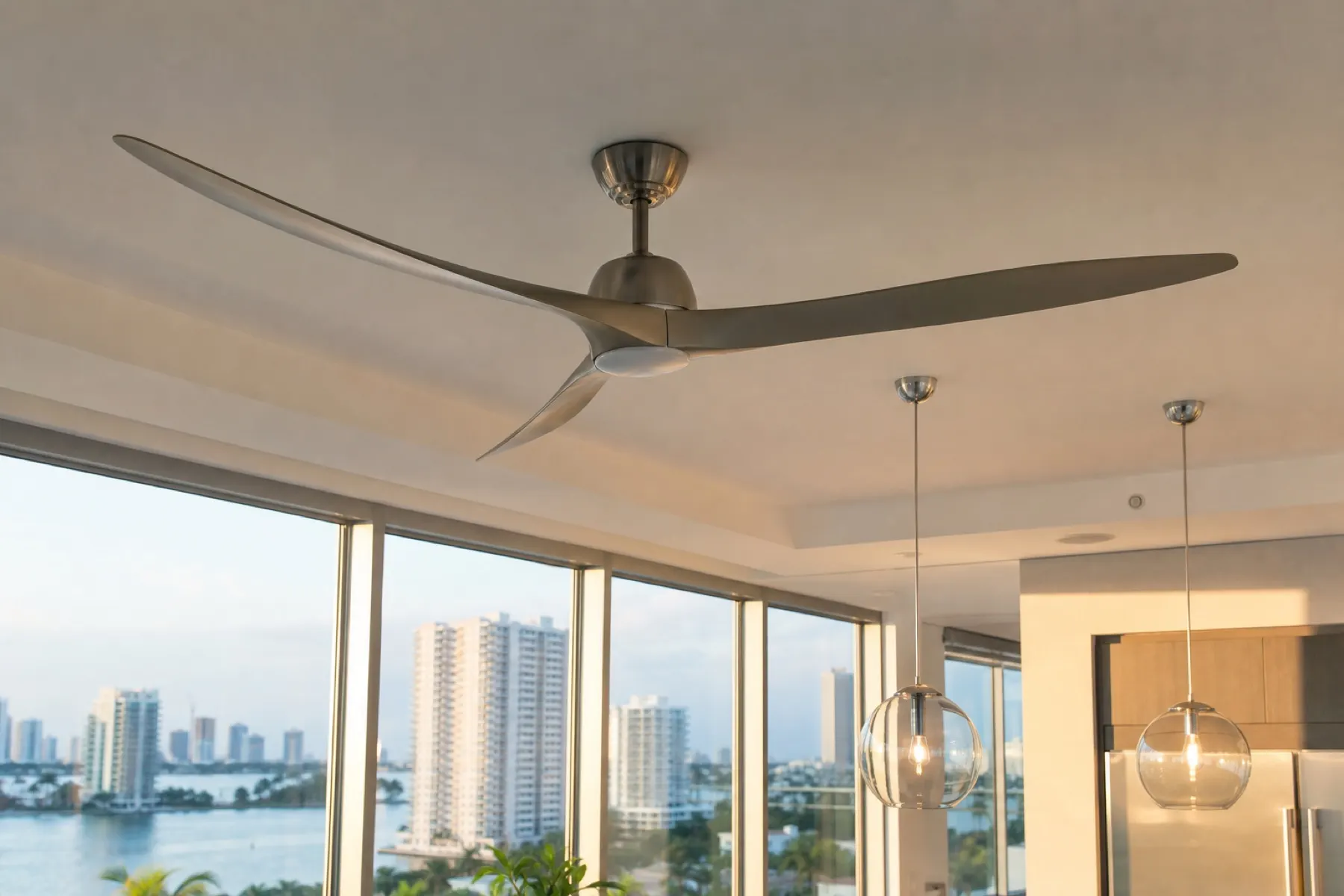
The enquiry that best represents this area is not about a broken light at all. A homeowner writes that the lights along the drive have been getting worse for a couple of years and now the last three are barely visible, and asks for brighter lamps. Brighter lamps will not fix it. What has happened is that the run was extended at some point — a few more heads added near the gate — and the cable is now delivering noticeably less voltage by the time it reaches the end, so those heads glow rather than light. The cure is rebalancing the run, not buying lamps, and it is worth knowing that before you spend anything. One note in passing: ceiling fans, including the ones over a covered terrace, are on our ceiling fan page.
Call (786) 788-8714 · Get a free quote

Every job gets a free written estimate with the scope, prep and materials named — not a vague day rate. Gold Hands Miami is insured. Work that legally requires a licensed trade is referred to a licensed pro.
Fixing a light to a Palmetto Bay concrete wall
Solid concrete is a wonderful thing to live behind and an unforgiving thing to hang anything on. There is no cavity, so a cable cannot be fished from one point to another inside the wall; there is no stud, so nothing is going to be caught by a wood screw; and the anchors have to be properly specified and properly set, because a fixing that is merely tight today will loosen under the weight and the wind. Our technician drills for the anchor the fixture actually needs rather than reusing whatever hole is already there, which on a rebuilt house is often an old plug that has been worried loose by two decades of a fitting swaying in storms.
The consequence people find most surprising is how little freedom there is in position. On a timber-framed house you can move a light a foot to balance an elevation without much thought. Here, the outlet is where it is, cast or chased into a solid wall, and relocating it means either a surface run in conduit — which is honest, tidy if done properly, and visible — or a licensed electrician cutting into concrete. So we ask early what the fitting has to line up with, and where the position is genuinely wrong we lay out the real options rather than nudging the fixture and leaving a plate that does not cover its old outline. It is a better conversation to have before the ladder comes out.
Long drives and big gardens: the far end of a Palmetto Bay run
Low-voltage lighting loses a little of its voltage along every metre of cable, and on lots this size that loss stops being theoretical. A run that was correct when it was installed becomes wrong the moment somebody adds four heads near the gate, and the first sign is never a dead fitting — it is the far end going dim, yellow and unreliable while the near end is fine. The cures are all on our side of the transformer: moving heads onto different taps, splitting a single long run into two shorter ones, taking failed and corroded connectors out of the middle of a run where they are quietly costing voltage, and rebalancing what is drawn from where.
The other large-lot pattern is mechanical. Cable buried across a big garden is found by edgers, spades, irrigation work and root movement far more often than a short run at a townhouse, and when it is damaged the symptom is characteristic: everything upstream of the injury works, everything beyond it is dark. That tells us where to dig, which on a lot of this size is worth a great deal — we open the short stretch between the last lit head and the first dark one rather than trenching hopefully. A proper waterproof joint goes in, not tape. And where the answer genuinely is that the far end of the property needs a supply of its own, that is an electrician's trench and an electrician's circuit, and we say so.
Perrine and the Village of Palmetto Bay are not the same street
The ZIP holds two kinds of house and they ask for different things. On one street you have an original ranch that has never been rebuilt: shallow eaves, an exterior box installed decades ago with a cover painted solid, a gasket that gave up in the last century, and probably one outdoor socket for the whole property. On the next you have a post-Andrew rebuild with solid walls, better boxes, and a layout that assumed outdoor power. The older house usually needs its seals, covers and fixings dealt with as part of any fixture change; the rebuilt house usually needs the right anchor and a conversation about position. Quoting both the same way is how people get surprised.
The administrative line matters only for the part we hand over. A village address and an unincorporated Perrine address go to different permit desks, so if your project reaches the point of a new outdoor circuit, the licensed electrician who takes that work will be dealing with the Village of Palmetto Bay in one case and Miami-Dade in the other. It does not change the work and it does change the timetable, which is worth knowing at the planning stage rather than at the end. For everything we actually do — fittings, seals, covers, photocells, timers and low-voltage runs on existing supplies — the boundary between the two is invisible.
Neighborhoods and ZIP codes we cover in Palmetto Bay
Light Fixture Installation in Palmetto Bay — questions we get asked
How is an outdoor lighting estimate for Palmetto Bay put together, and why no price here?
Because a single enquiry can mean one lantern on a live outlet or a whole driveway run that needs rebalancing and a cable repair in the middle of it. Our written estimate is free and assembled from specifics: how many fittings are genuinely dead as against merely dim, whether they quit together, the length of the run and the number of heads hanging off it, the material of the wall, and whether a licensed electrician is required for any part of it. Photographs of the far end of the drive at night are unusually informative, because dim and dead are different problems with different answers.
Who comes out to a Palmetto Bay property, and what happens to the lawn and the walls?
One technician, ours rather than a subcontractor's, named up front. On concrete walls the whole concern is anchoring and making good: the correct anchor set properly, old plugs taken out instead of reused, and holes filled wherever a new plate leaves them showing — and any outline the previous unit has printed on the wall is mentioned while that unit is still up. Out in the garden we open the shortest length of ground that reaches the fault and lay the turf back rather than leaving a scar across the lawn. Where the circuit turns out to be what failed, work ends at that point, the findings are handed over, and no fitting is billed.
Does the Village of Palmetto Bay or an association have a say in my exterior lighting?
Sometimes, and it is worth checking before ordering rather than after fitting. In the communities here that have an association, the rules generally govern appearance — the style and finish of a street-facing fitting, and often where a flood may point, since on lots this size a badly aimed light reaches a long way. Some entrance and common-area lighting is not an individual owner's at all. Give us the community name or the management contact with your enquiry and we will confirm what is permitted, supply a certificate of insurance if it is wanted on file, and keep to any contractor hours the community sets.
Everything outside my Palmetto Bay house went dark at once. Does a whole run have to be replaced?
Almost never. Lanterns give out singly, each on its own schedule; a set that stops together is telling you about the one thing all of them lean on, which on a low-voltage system is the transformer, the dusk sensor fitted to it, the clock in its lid, or the breaker ahead of it. That is a component, not a rebuild. The pattern that does point at the cable is different — everything near the house working and everything past a certain point dark — and even that is a repair at one location rather than a new run. We read which pattern you have before touching a single head, because the two lead in completely opposite directions.
I rent a house in Palmetto Bay. What will the owner have to agree to?
Put it in writing and split it in two. Making a dead unit work again on a socket that has been in that wall for decades is upkeep, and on a solid-walled house it also shuts a joint that would otherwise stay open to the rain, so owners generally approve it quickly. Wanting light in a new place — a fitting on a bare concrete wall, heads down a drive with no supply, a socket outside where there is none — changes the property and is the owner's decision, with the owner's licensed electrician doing any new circuit. Describe what you have and we will tell you which half of that you are in before you write to them.
Our Palmetto Bay house was rebuilt after Andrew. Is exterior lighting part of storm preparation?
It is, in a smaller way than the shutters but a real one. The items worth checking before a season are simple: is every fitting still tight to the wall rather than swaying on a loosened anchor, is every gasket still touching, is every cover on its box closed and sound, and is any fitting in a position where something is likely to be thrown at it. Loose fixings are the ones that matter most, because a swaying fitting opens its own seal and then the wall takes water for the rest of the summer. Afterwards, anything that has filled with water or cracked should be dealt with before the next storm rather than after it, and a circuit that has started tripping belongs with a licensed electrician instead of being reset one more time.
Can you install a ceiling fan where there's currently just a light?
In most cases, yes. We verify the electrical box can support the fan's weight and motion, and upgrade the box if needed — that may add a small cost but keeps the installation safe.
Do you install recessed lighting?
Yes, into existing ceilings. Pricing depends on the number of lights and whether new wiring is needed to reach them.
Other work we do in Palmetto Bay
- Ceiling Fan Installation & Repair in Palmetto Bay
- Door Repair & Installation in Palmetto Bay
- Drywall Repair in Palmetto Bay
- Faucet Installation & Repair in Palmetto Bay
- Furniture Assembly in Palmetto Bay
- Garbage Disposal Installation & Repair in Palmetto Bay
- Interior & Exterior Painting in Palmetto Bay
- Picture & Mirror Hanging in Palmetto Bay
- Shelf Installation in Palmetto Bay
- Toilet Installation & Repair in Palmetto Bay
- TV Mounting in Palmetto Bay
Need light fixture installation in Palmetto Bay?
Send photographs of the job to (786) 788-8714 and a written quote comes back naming the scope and the materials. The quote costs nothing, and nothing reaches the invoice that was not on it.