Blog › October 9, 2026 · 5 min read
What determines the cost per square foot for interior house painting?
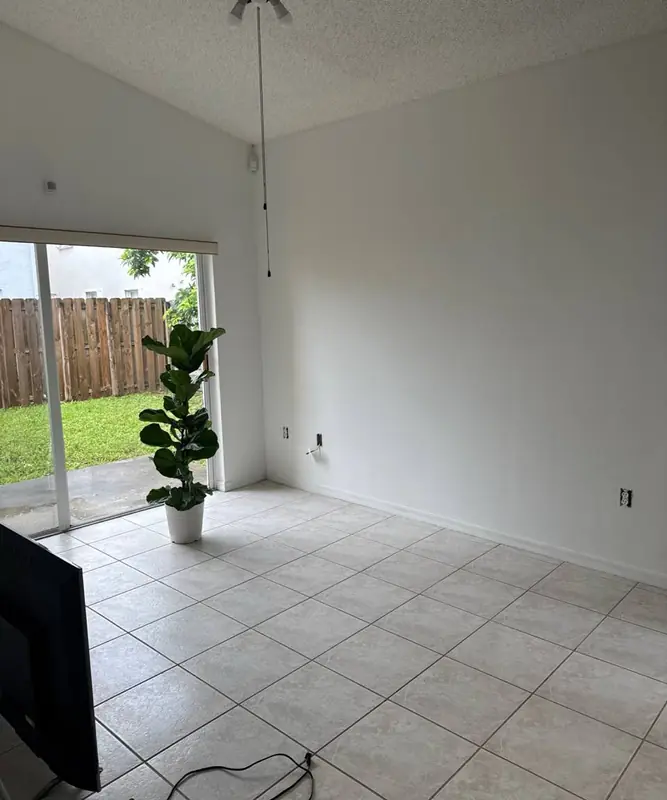
Cost per square foot for interior painting is set mostly by what's underneath the paint, not the paint itself. Wall condition, how much prep and repair the surface needs, ceiling height, trim and door count, and the number of coats required all move the number far more than brand of paint. A price quoted over the phone as a flat per-square-foot rate is always a rough placeholder until someone walks the rooms.
Key takeaways
- Wall prep and repair, not paint brand, is the biggest factor in interior painting cost
- Ceiling height, trim detail, and door/window count add labor time beyond basic square footage
- Color changes from dark to light (or the reverse) usually require extra coats and primer
- South Florida humidity affects dry time and can hide mildew that needs treatment before painting
- An in-person estimate is more accurate than any flat per-square-foot number quoted over the phone
Why "per square foot" is a starting point, not a quote
Square footage tells you how much floor area a room covers, but paint goes on walls and ceilings, not floors. A room with 10-foot ceilings has noticeably more surface area to cover than an identical footprint with standard 8-foot ceilings, yet both get described the same way when someone says "this is a 200 square foot room." That mismatch is the first reason two rooms that sound similar on paper end up priced differently once someone actually measures wall area.
The second reason is that a per-square-foot number usually assumes walls in reasonably good shape, standard trim, and a single, consistent color scheme. The moment any of those assumptions breaks — patched drywall, crown molding, a client who wants two accent walls in a different sheen — the per-square-foot math stops being useful and the job has to be priced on what it actually takes to finish it well. That's why Gold Hands Miami gives a free on-site estimate for painting between Miami and Fort Lauderdale instead of quoting blind off a square footage figure.
Surface condition and prep work
Prep is the single biggest swing factor in any interior paint job, and it's the part homeowners underestimate most. Walls with hairline cracks, old nail pops, water stains, or peeling paint from a previous leak all need to be addressed before a roller ever touches them. Skipping that step doesn't save money — it just means the new paint fails faster and the flaws show through, especially under the kind of harsh, direct sunlight common in South Florida rooms with large sliding glass doors.
Prep work includes filling and sanding holes, scraping and feathering loose paint, caulking gaps where trim meets wall, washing surfaces to remove grease or nicotine film, and spot-priming stains so they don't bleed through the topcoat. A room that's never been painted since construction, or one that was painted by a previous owner with flat paint over glossy trim, takes meaningfully longer to prep than a room that was painted carefully a few years ago and just needs a refresh. That difference in labor hours is what actually drives the per-square-foot number up or down, not the paint can.
- Patching nail holes, cracks, and drywall dings
- Sanding rough or peeling areas smooth
- Caulking trim and baseboard gaps
- Washing walls in kitchens and bathrooms before priming
- Spot-priming water stains or smoke damage so they don't bleed through
Paint quality, sheen, and number of coats
Not all interior paint behaves the same way, and the choice affects both cost and how many coats are needed to get solid, even coverage. Builder-grade flat paint is cheap but often needs an extra coat over darker existing colors, which adds labor even though the material cost per gallon looks lower. A higher-quality acrylic with better hide can sometimes get the job done in fewer coats, which can offset some of that price difference in labor time.
Sheen matters too. Eggshell and satin are common for walls because they wipe clean without showing every roller mark, while kitchens, bathrooms, and laundry rooms usually call for a more washable, moisture-resistant sheen given South Florida's year-round humidity. Going from a light wall color to a dark one, or the reverse, almost always requires a tinted primer and at least two topcoats to avoid patchy coverage — that's a real labor difference, not just a preference.
Ceilings, trim, doors, and architectural detail
A plain rectangular room with flat walls, standard baseboards, and one door paints quickly. A room with crown molding, wainscoting, multiple windows, French doors, or a tray ceiling takes considerably longer because cutting in around detail work is slow, careful hand-painting — it can't be rolled. Each door and window casing adds time whether or not it adds much to the square footage of the room.
Ceilings are their own line item in most real quotes, separate from wall square footage, because popcorn or textured ceilings take more paint and more careful application than a smooth drywall ceiling. Stairwells and great rooms with high or vaulted ceilings also need ladders, scaffolding, or lift equipment to reach safely, and that access requirement shows up in labor time even though the painted area itself might not be unusually large.
South Florida humidity, mold, and condo or HOA rules
Humidity affects both prep and dry time. Interior walls near bathrooms, laundry closets, or exterior walls that run close to AC ductwork can develop mildew staining or a slightly musty surface that needs to be cleaned and treated before paint goes on — skipping that step means the stain reappears through the new coat within months. Between coats, painters also have to account for slower dry times when indoor humidity is high, which is common for units without the AC running during the workday.
Condo and HOA buildings add their own layer. Some associations require advance notice before any work crew enters common hallways or uses the service elevator, restrict working hours, or require proof of insurance on file with the management office before access is granted. None of that changes the paint itself, but it does affect scheduling and sometimes adds setup and breakdown time per visit, which is worth asking about early if the property is in a managed building.
What actually moves your price, and how to get a real number
Put together, the real cost drivers are: how much prep the walls need, how many coats the color change requires, how much trim and detail work is involved, ceiling height and access, and any building-specific scheduling requirements. Square footage is just the frame those factors sit inside, which is why two homes with the same floor plan can get different numbers from the same painter.
The only way to get an accurate figure is to have someone walk the space and look at the actual walls, not guess from a floor plan. Gold Hands Miami offers a free on-site estimate for painting anywhere from Miami to Fort Lauderdale, backs the finished work with a 5-year transferable warranty, and labor across all services runs at $100 an hour with a 2-hour minimum. Jobs outside painting — including anything that touches plumbing, electrical, or structural work requiring a permit — get referred out or routed through our GC partner, who holds the contractor's license. You can book online at /book with a $50* deposit, or call (786) 788-8714 to talk through a project before scheduling.
* Minimum visit $200 — smaller jobs can be combined into one visit.
Frequently Asked Questions
Does the per-square-foot price include ceilings and trim?
Not usually. Ceilings, baseboards, door and window casings, and crown molding are typically priced separately from wall square footage because they require different techniques and more hand-painting time.
Why would two rooms the same size cost different amounts to paint?
Wall condition is the main reason. A room needing crack repair, stain blocking, or a color change from dark to light will take more labor hours than a room that's simply getting a fresh coat in a similar shade.
Is cheaper paint actually cheaper overall?
Not always. Lower-grade paint sometimes needs an extra coat to cover evenly, which adds labor time that can offset the lower material cost. A better-quality paint with good hide can sometimes finish in fewer coats.
How does South Florida humidity affect an interior paint job?
High humidity slows dry time between coats and can hide mildew staining on walls near bathrooms or exterior walls, which needs to be treated before painting or it will show through the new coat.
Do condo or HOA rules change the cost of painting a unit?
They can affect scheduling more than cost directly. Some buildings require advance notice, proof of insurance on file, or restricted working hours, which can add setup time per visit.
How do I get an accurate number instead of a rough per-square-foot estimate?
Have someone look at the actual walls in person. Gold Hands Miami offers a free on-site estimate for painting between Miami and Fort Lauderdale so the quote reflects the real condition of the space.
Related guides
- Interior Painting Cost in Miami: 2026 Room-by-Room Guide
- Should a painting estimate list the cost of paint separately from labor?
- Interior Painting Cost in Miami: What to Expect in 2026
Have a project like this?
Miami-Dade & Broward, English & Spanish — insured and bonded. Painting gets a free on-site estimate (Miami to Fort Lauderdale); other jobs are estimated by phone or from photos. Related: painting.
Call (786) 788-8714 Book online ($50* deposit)