Blog › November 24, 2026 · 5 min read
Does providing your own paint lower the cost of a ceiling painting job?
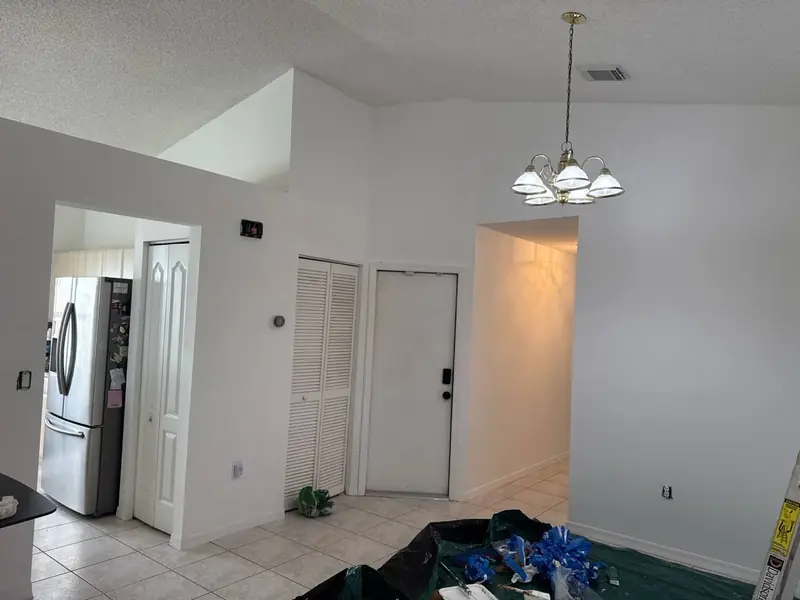
Yes, it usually can — because when you supply the paint, the job is priced as labor only, and you're not paying a markup on materials. But the savings are smaller than most people expect, and they can disappear entirely if you buy the wrong product, the wrong sheen, or too little of it. The real question isn't whether you can supply your own paint. It's whether doing so is worth the errand, the risk, and the return trip to the store.
Key takeaways
- Supplying your own paint turns the job into labor-only pricing, so you skip the materials markup — but the labor, prep, and access work don't change.
- Ceilings want a flat finish; bathrooms and laundry rooms need moisture-rated paint, and water stains need a separate stain-blocking primer.
- Buy the full quantity in one trip with matching batch codes — running short mid-job can push the work to another day.
- Ask for the quote both ways, labor-only and labor-plus-materials, to see your actual savings before deciding.
- Remodel and tile work runs through our GC partner, who holds the contractor's license; painting is quoted separately.
What actually changes when you supply the paint
A ceiling painting quote is built from a few moving parts: the labor to prep and coat the ceiling, the materials (paint, primer, caulk, tape, plastic, roller covers, sanding pads), and whatever access equipment the room needs. When you supply the paint, you're removing one line item from that stack — the paint itself and any handling around it. The labor doesn't change. The prep doesn't change. The ceiling still has to be masked, patched, sanded, and cut in at the walls, and that work is the bulk of what you're paying for.
At Gold Hands Miami we quote labor separately and let the customer supply the materials if they prefer. That's a real option, not a courtesy. But we ask whether the customer already has the paint before we scope an interior painting job, because the answer changes how we plan the visit — how much we need to bring, whether we need to match a sheen, and whether the job can start on the day we arrive or has to wait on a store run.
- Labor-only pricing removes the paint and sundries from the quote.
- Prep, masking, patching, and cut-in work are unchanged.
- You control the product, the sheen, and the color lot.
- You also own the risk if the product is wrong or short.
Where the savings come from — and where they don't
The savings come from two places. First, you're not paying a markup on paint. Second, you can choose a product at a price point you're comfortable with, which means you can spend less per gallon than a contractor would specify. That second point is where homeowners often overestimate the win. A cheaper ceiling paint is cheaper for a reason: it can cover in fewer coats only if it's a quality flat, and a thin product may need an extra coat, which eats the savings in labor.
The savings do not come from the labor. Ceiling work is slow, overhead work. It's the part of an interior painting job where the body pays for it — arms up, neck back, ladder or platform moves, and cut-in lines that have to be straight against a wall you're not repainting. None of that gets cheaper because you bought the paint. If you're comparing two quotes and one is dramatically lower, look at what's excluded, not at who's buying the paint.
The product details that decide whether DIY paint is a good deal
Ceilings are not walls. They want a flat finish, because flat hides the roller stipple and the small imperfections that overhead light rakes across. A satin or eggshell on a ceiling will show every lap mark and every patch. In South Florida, humidity also matters: a ceiling in a bathroom or a laundry room needs a product rated for moisture, or you'll be back up there sooner than you'd like. If the ceiling has water stains — common after a roof leak or a condensate line clog — you need a stain-blocking primer first, and that's a separate product from the paint.
Quantity is the other trap. Ceiling paint is typically sold in gallons, and a room's ceiling area is easy to underestimate because you're measuring length times width, not wall height. Buy too little and you're making a mid-job store run, which can push the work into another day. Buy too much and you're storing a partial gallon that will skin over before you need it. We confirm the size of the area to be painted so we can plan the work properly — and if you're supplying the paint, that same measurement is what tells you how much to buy.
- Flat finish, not satin or semi-gloss, for most ceilings.
- Moisture-rated product for bathrooms and laundry rooms.
- Stain-blocking primer for water stains, separate from the topcoat.
- One color lot for the whole ceiling — check the batch codes.
How we scope a ceiling job when the customer has the paint
We ask what kind of painting the customer needs — interior or exterior — before quoting anything, because the prep and the products are different jobs. For an interior ceiling, we then ask for pictures of the room. Photos tell us the ceiling height, whether there's crown molding, how much furniture has to move, and whether the ceiling has stains or patches. That's usually enough to price the labor. If the room is complicated, we offer to send someone to view the space and discuss the painting options in person.
Once the estimate goes out, we follow up to see whether the customer has reviewed it. That's not a sales call. It's where most of the back-and-forth happens — someone reads the quote, realizes they meant to ask about the closet ceiling too, or decides they'd rather we supply the paint after all. Better to sort that out before the day of the job than on it.
When supplying your own paint is the right call — and when it isn't
It's the right call when you already have the paint. Maybe a previous owner left a labeled gallon in the garage, or you bought the ceiling paint when you bought the wall paint. In that case, supplying it is pure savings, provided the paint is still good — no skin, no freeze damage, no separated solids. Stir it and check. It's also the right call when you have a specific product you trust and want to control the sheen and the color lot yourself.
It's the wrong call when you're buying paint specifically to save money on a small ceiling. The errand, the quantity math, and the risk of a short or wrong product often cancel the difference. It's also the wrong call when the ceiling needs stain-blocking primer or moisture-rated paint and you're not sure which — that's a conversation to have before you're standing in the paint aisle. And if the job runs through our GC partner for a remodel — a bathroom or kitchen ceiling, for instance — the paint is usually folded into that scope, not handled separately.
The practical way to decide
Ask for the quote both ways: labor-only, and labor plus materials. The gap between them is your actual savings, and it's usually smaller than the sticker price of the paint. Then ask yourself whether you want to own the product decision. If the ceiling is straightforward — flat white, no stains, standard height — supplying your own paint is low-risk. If it's stained, textured, or in a wet room, let the person doing the work specify the product, because the product is part of the result.
Gold Hands Miami paints ceilings across Miami-Dade and Broward, and we're insured and bonded. Painting comes with a 5-year transferable warranty and a free on-site estimate from Miami to Fort Lauderdale; every other job is estimated by phone or from photos. Labor is $100/hr with a 2-hour minimum, and you can book online at /book with a $50* deposit. If you want to talk through whether to supply your own paint, call (786) 788-8714 — we're bilingual in English and Spanish. You can see how we handle interior work on our painting page.
* Minimum visit $200 — smaller jobs can be combined into one visit.
Frequently Asked Questions
Does supplying my own paint lower the price of a ceiling painting job?
It can, because the job is then priced as labor only and you're not paying a markup on materials. The savings equal the paint and sundries line, not the labor. Prep, masking, patching, and cut-in work are unchanged, so the difference is usually smaller than homeowners expect.
What kind of paint should I buy for a ceiling in South Florida?
A flat finish for most ceilings, because flat hides roller stipple and small imperfections under overhead light. For bathrooms and laundry rooms, choose a product rated for moisture. If there are water stains, you also need a stain-blocking primer, which is a separate product from the topcoat.
How much ceiling paint do I need to buy?
Measure the ceiling's length times width to get the area, then check the coverage figure on the can. Buy all of it in one trip and confirm the batch codes match, so the color is consistent across the whole ceiling. Running short mid-job can push the work into another day.
Can I supply the paint if the ceiling is part of a bathroom or kitchen remodel?
Remodels and tile run through our GC partner, who holds the contractor's license, and paint is usually folded into that scope rather than handled as a separate supply-your-own arrangement. Ask before the scope is set.
Do you charge extra if I supply the paint?
No. We quote labor separately and let the customer supply the materials. Labor is $100/hr with a 2-hour minimum, and the quote reflects the work, not who buys the paint.
How do I get an estimate for a ceiling painting job?
Painting gets a free on-site estimate from Miami to Fort Lauderdale. We ask for pictures of the room first, and we can send someone to view the space and discuss options in person. Call (786) 788-8714 or book at /book with a $50* deposit.
* Minimum visit $200 — smaller jobs can be combined into one visit.
Related guides
- Does supplying your own paint lower the cost of popcorn ceiling removal?
- Should a painting estimate list the cost of paint separately from labor?
- What painting supplies should a homeowner have on hand before a paint job?
Have a project like this?
Miami-Dade & Broward, English & Spanish — insured and bonded. Painting gets a free on-site estimate (Miami to Fort Lauderdale); other jobs are estimated by phone or from photos. Related: painting.
Call (786) 788-8714 Book online ($50* deposit)